
I am 61, and for a year and a half the first decision of every morning was how to get out of bed without setting my leg off. Not my back — my leg. That was the part nobody warned me about. The ache sat in my lower back, but the pain that actually stopped me travelled down the outside of my right thigh and into my calf, and it arrived with the specific electrical quality that people who have had sciatica recognise instantly.
I did the sensible things, in roughly the order most people do them. A posture brace. A stretching routine off the internet, then a better one from a physiotherapist. Heat pads. Two rounds of anti-inflammatories from my GP. Each one helped for a while, in the way that turning down a radio helps — the noise is quieter, the source is unchanged. Within a fortnight I was always back where I started.
What I could not work out was why. I was doing everything correctly and getting nowhere, and after eighteen months of that you begin to assume the answer is simply that you are older now and this is the arrangement from here on.
It was my daughter who changed the framing. Her own physiotherapist had told her something about disc height that nobody had put to me in those terms, and once I heard it, the failure of everything else stopped being mysterious.
The part that had been missing
Between each pair of vertebrae sits a disc. Its job is to hold the two bones apart and absorb load — a spacer and a shock absorber in one. The nerve roots that eventually become the sciatic nerve pass out through the gaps those spacers create.
Discs lose water content with age. As they do, they lose height, and the vertebrae above and below settle closer together. The gap the nerve root travels through narrows. That is the mechanism behind a great deal of ordinary lower-back and leg pain: not damage to the nerve itself, but a reduction in the space it has to occupy.
It reframed everything I had already tried. A brace changes posture. A stretch lengthens muscle. An anti-inflammatory reduces the body's reaction. None of the three does anything about the height of a disc or the space around a nerve root, which is why all three worked exactly as long as I kept doing them and not one day longer.
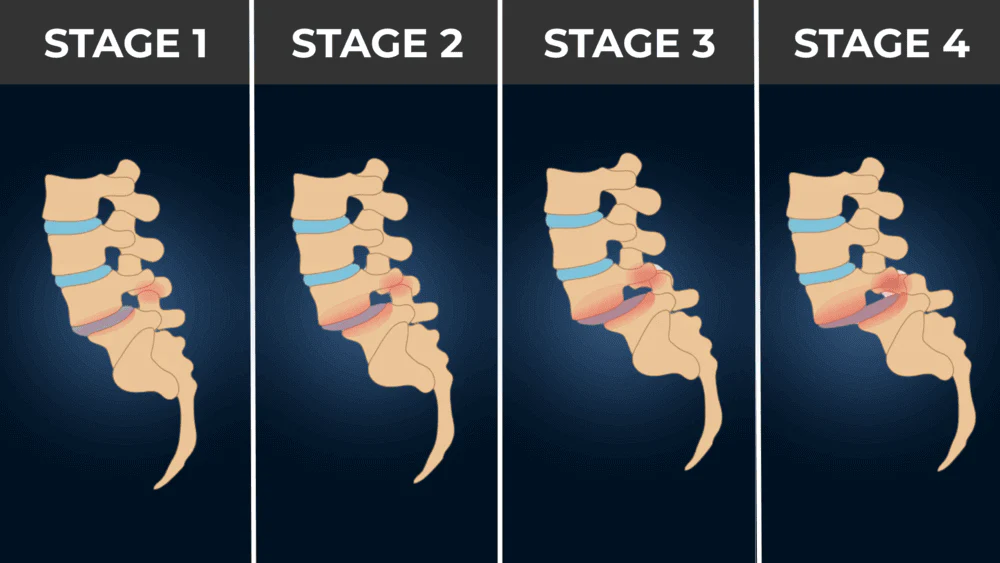
The other thing worth knowing is that the process tends to compound. Less space means more nerve irritation; more irritation means less movement; less movement means stiffer surrounding muscle and a spine that is loaded even more unevenly. Left alone it does not usually hold steady. That was the part I found genuinely worrying.
What my daughter lent me
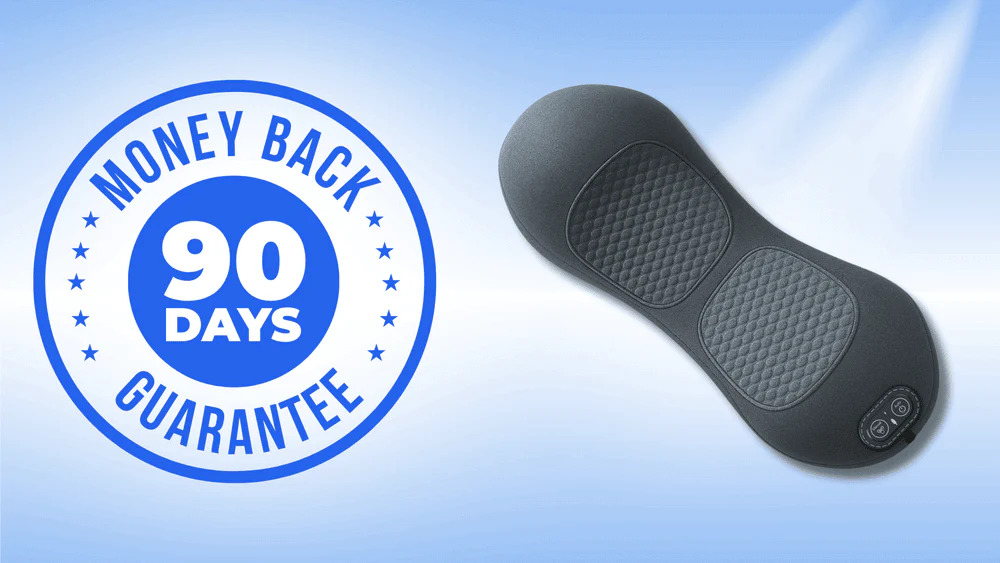
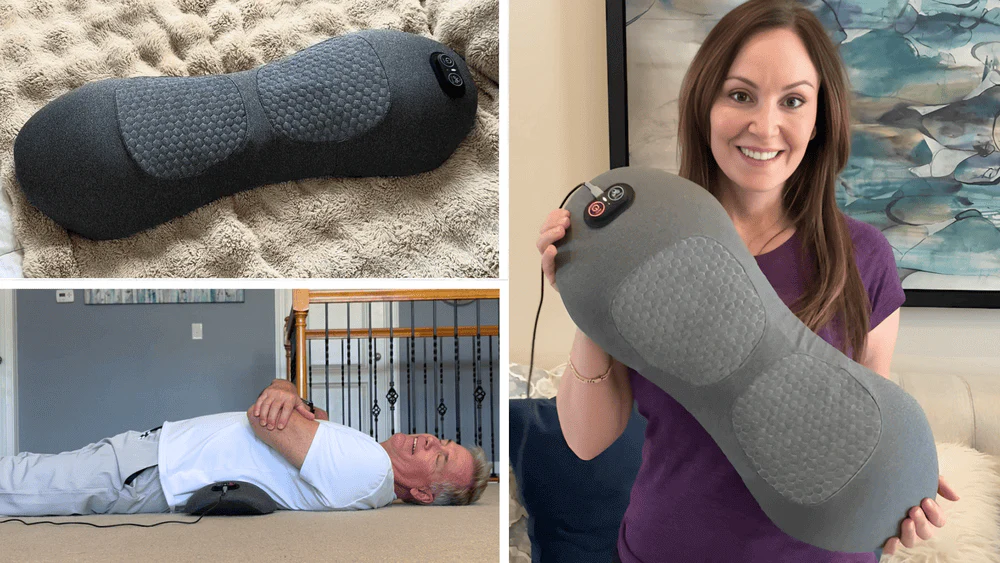
The device her physiotherapist had recommended is called the SmoothSpine Triple Fusion Massager. You lie on it. It sits under the lumbar curve, you press a button, and it runs for as long as you have set it for. She had been using hers most evenings and passed it over for a fortnight to see whether it did anything for me.
“Triple Fusion” is the manufacturer's name for the fact that it combines three things that are usually separate pieces of equipment.

01 · TRACTION
Gentle decompression
A slow arching stretch intended to ease the vertebrae apart and take load off the discs between them, creating a little more room around the nerve root while you lie there.

02 · MASSAGE
Targeted vibration nodes
Micro-vibration points work into the muscle either side of the spine — the tissue that tightens protectively around a sore back and then keeps it stiff long after the original flare has passed.

03 · HEAT
Warmth through the lumbar
Steady heat across the lower back, which is the oldest and least controversial part of the whole arrangement: warm tissue relaxes, and relaxed tissue tolerates the stretch better.
Is there research behind any of this?
Some, and it is worth being precise about what it covers. Non-surgical spinal decompression — the clinical version of the traction idea — has been tested in randomised trials. One published in BMC Musculoskeletal Disorders in 2022 compared decompression therapy plus routine physiotherapy against routine physiotherapy alone in patients with lumbar radiculopathy, and reported better outcomes for the combined group on pain, range of motion and functional disability after four weeks.
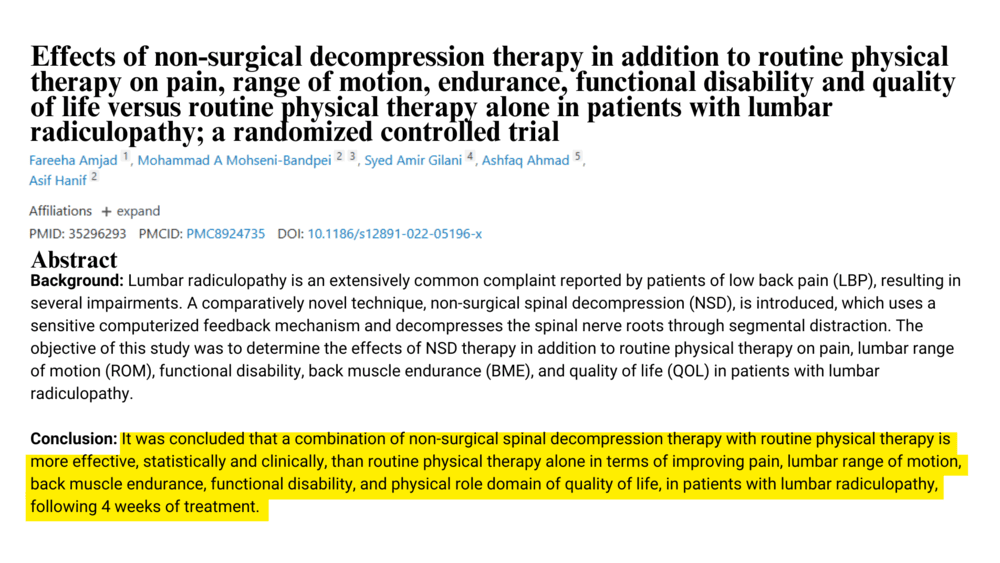
The important caveat: that trial used clinical decompression equipment alongside supervised physiotherapy — not this product, and not at home. The same is true of the heat and massage literature: it examines the therapies, not the device. Research of this kind is a reason to take the mechanism seriously. It is not evidence about what any particular home unit will do for you.
Using it, practically
I started at five minutes because the instructions said to, and because the first session felt strange rather than pleasant — a stretch in a direction my back had not been asked to go for a long time. By the fourth or fifth session that had stopped, and I moved up to ten minutes, then fifteen, which is where I have stayed.
Everything is on a small panel on the device: an automatic program, or any of the three modes on their own. I use the massage alone on days when my back is only tired, and the full combination when the leg has been talkative. It is quiet enough to run while watching television, which is the honest reason I have kept it up — I have abandoned every exercise routine I have ever started, and this one asks nothing of me except that I lie down.
Where I have actually landed
I want to be careful here, because I have read enough of these pages to be suspicious of the ones that promise a transformation. So: my leg pain is not gone. What has changed is its frequency and its ceiling. I get perhaps one bad episode a fortnight instead of something most days, and when it comes it no longer reaches the intensity that used to make me sit down on the floor wherever I was.
The first thing I noticed was mornings. Getting upright stopped being a negotiation somewhere in the second week. Sitting through a meal came back after about a month. I have been on two long car journeys since, both of which I would have cancelled last year.
Where I was, this time last year
- Leg pain most days, unpredictable in timing
- Standing at the sink for ten minutes was the limit
- Woke two or three times a night from pressure
- Stopped gardening entirely
- Turned down anything involving a long drive
Where I am after four months
- Roughly one flare a fortnight, and milder
- Mornings no longer start with a negotiation
- Sleeping through most nights
- Back in the garden, in shorter sessions
- Two long drives done without regretting them
My experience, not a forecast. One person's account cannot tell you what a device will do for a different spine, a different diagnosis or a different history. Nothing here is a promise of relief, and none of it is medical advice.